
The “Session Drop-Off” Nobody Talks About
Why Progress Slows — and How to Interpret It Properly.
When the Fade Slows Down
Many clients are pleasantly surprised by how much fading they see after their first one or two tattoo removal sessions. Just as often, that early optimism can turn into disappointment when progress appears to slow down.
We regularly hear concerns such as:
“The laser wasn’t turned up enough.”
“Not all of the tattoo was treated.”
“It didn’t blister, so nothing happened.”
This perceived slowdown is entirely normal. We explain it at the very beginning of the process because understanding it early helps set realistic expectations. This post explains why progress can appear to stall, why this is not a problem, and how we actively keep clearance moving in the right direction.
In simple terms, it may look like ink clearance has slowed — but appearances can be misleading. No two tattoos are the same. Ink composition varies enormously, with thousands of formulations in use worldwide, applied by different artists, onto different skin types.
The Fast Start - Why Early Sessions Seem More Dramatic
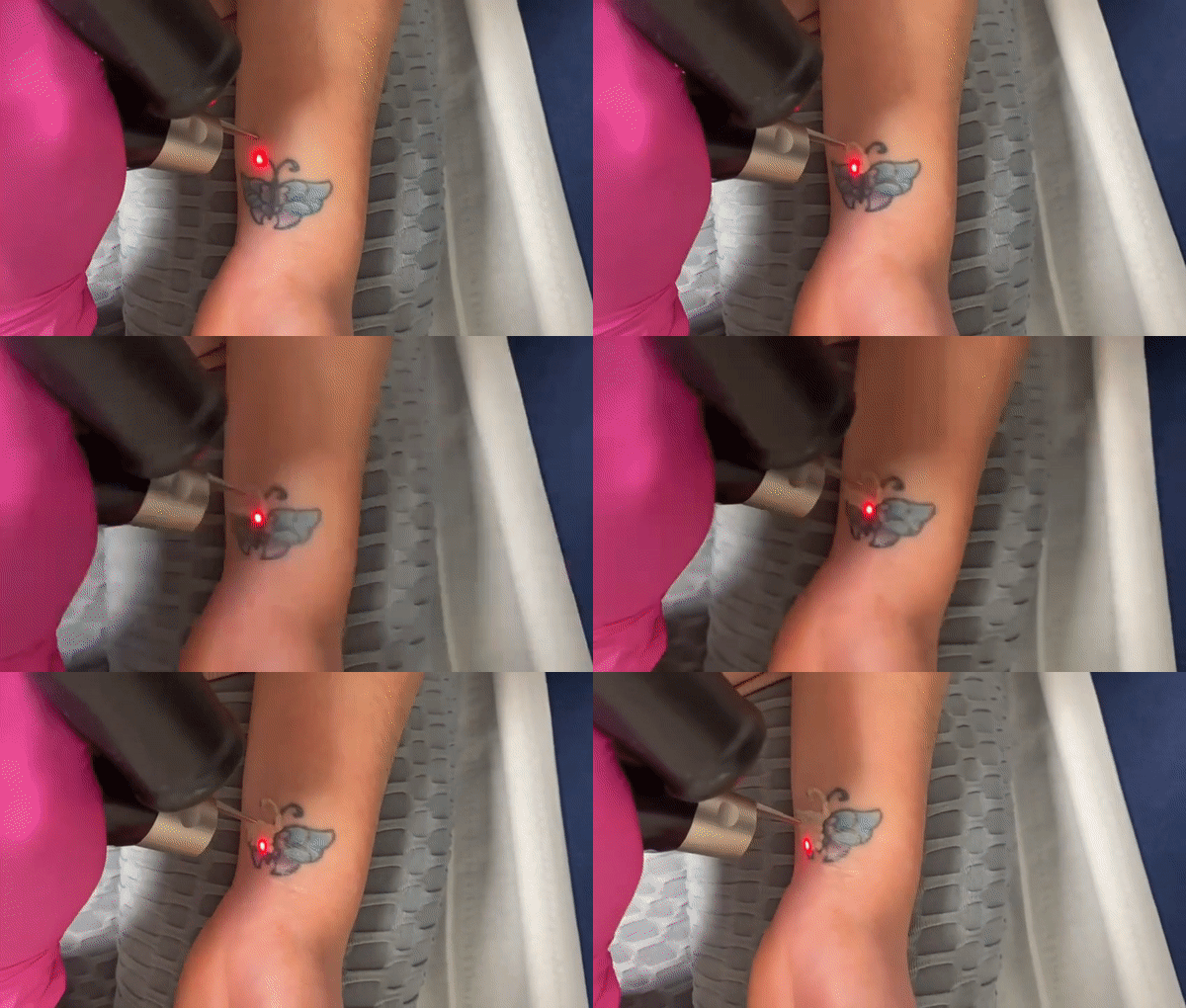
An example of “frosting” in Laser Tattoo Removal
For anyone who has undergone tattoo removal, the first session often feels the most dramatic. The skin typically shows a visible “frosting” effect. This occurs when the laser rapidly heats the ink pigment, creating gas bubbles that rise to the surface and dissipate as carbon dioxide.
Frosting provides reassurance for both client and practitioner — it confirms that the laser has penetrated the ink and that the body is responding appropriately. It’s a sign that correct settings are being used and that a proper clinical reaction is taking place.
Not all colours frost equally. Darker “midnight” colours tend to respond most visibly, while lighter “sunset” colours often show very little frosting. As treatment progresses, frosting naturally becomes less evident because there is less ink and it sits deeper in the skin.
The most straightforward removals are typically black or grey tattoos on lighter skin types (Fitzpatrick I–II). These allow practitioners to treat confidently without risking pigmentation changes, and fading is more visible to the naked eye. Even so, slower progress can still occur due to multiple contributing factors.
The Mid-Journey Plateau - What’s Really Going On
After two or three sessions, many clients feel that progress has slowed — but in reality, clearance is usually still happening beneath the surface. It’s simply less visually obvious.
At this stage, treatments often become more comfortable, and we can begin targeting the tattoo in multiple ways, addressing both superficial and deeper ink layers.
No two tattoo removals are alike. Light shading tends to clear quickly, while dense, layered tattoos take longer. We often compare tattoo removal to breaking down a stone: first it fractures into pebbles, and then those pebbles are gradually carried away by the body.
Clearance depends on many variables — ink type and depth, laser technology, and crucially, the efficiency of the body’s lymphatic system. A healthier, more effective lymphatic response generally leads to better outcomes.

The colour of the ink, and the skin tone, affect the ease and speed of Laser Tattoo Removal. A dark ink, on a light skin tone, such as for this individual, will see the quickest results.
What You Might Think It Means (But It Doesn’t)
“The laser has stopped working.”
High-quality laser systems do not “max out” before full clearance. Tattoo removal simply requires patience and consistency.
“It’s stuck like this forever.”
With properly maintained, advanced equipment and an experienced practitioner, full clearance is an accepted and realistic outcome.
“I need a different clinic.”
Switching clinics mid-process rarely improves results and can sometimes set progress back. Most tattoos behave similarly over time. Trusting an experienced professional is usually the best course.

What It Actually Means
Ink depth varies across the tattoo
Even the most skilled artists deposit ink unevenly. This leads to patchy fading, which is expected.
Colours and layers respond at different speeds
Different pigments, shades, body locations, and even gender can significantly affect removal timelines.
Healing naturally slows over time
Like removing a stain, early sessions address the most accessible pigment. Deeper, more stubborn ink simply requires more time.
Reading Progress the Right Way
Progress isn’t always visual — it’s often cellular.
We work to break down ink from all angles: surface, sides, and beneath. Much of this isn’t immediately visible. Clients often rely on memory rather than objective comparison and may not notice the tattoo becoming progressively lighter or thinner.
Compare photos every 2–3 sessions, not week to week
Avoid constant checking — a watched pot never boils
Always compare day one with the most recent image — these tell the real story
How We Adjust the Plan (And Why That’s a Good Thing)
Changing laser settings
Tattoo removal is not linear, nor purely formulaic. Experienced practitioners adjust settings as ink depth and density change.
Adjusting time between sessions
While manufacturers provide clinical guidelines, skilled practitioners tailor spacing based on client response and healing. Longer gaps often mean better clearance — not slower progress.

Mini FAQ: Common Drop-Off Questions
-
Often, the recommendation is simply to allow more time between sessions to support healing and clearance.
-
At Fade, we use the PicoSure Pro. There is no credible peer-reviewed evidence that switching to another laser improves outcomes. Older Q-switched machines may increase the risk of pigmentation issues. Optimal results come from skilled parameter adjustments, not laser hopping.
-
Different ink, artist technique, placement, and individual biology all play a role. Your friend’s experience doesn’t predict yours.
Trust the Process — and the Professionals Behind It
No two people are the same. No two tattoos are the same. Tattoo removal is not a straight line. The slowdown many clients experience is normal and expected.
With advanced technology and an experienced practitioner, your treatment plan will be adjusted as needed to support the best possible outcome. If you trust your clinic, trust the process — it works.
If you’re unsure about your progress, a second opinion can help, particularly if inferior equipment or limited experience is involved.
Curious whether you’re in the “drop-off” stage?
Bring your tattoo in and we’ll show you exactly where you are in your fade journey.